
Every Parent Wonders—“Is My Baby Growing Right?”
Let’s be real—almost every parent has had this thought at least once. “Is my baby’s weight okay? Are they growing normally?”
And it’s not just anxiety. According to the World Health Organization (WHO), regular growth monitoring is one of the simplest and most effective ways to detect early health or nutrition issues in children.
This is exactly why many families now use a Baby Growth Tracker App for parents to keep things clear and organized. Not because they want more data—but because they want fewer doubts.
What Is a Baby Growth Tracker App?
Let’s keep this straightforward.
A baby growth tracker app is a tool that helps you:
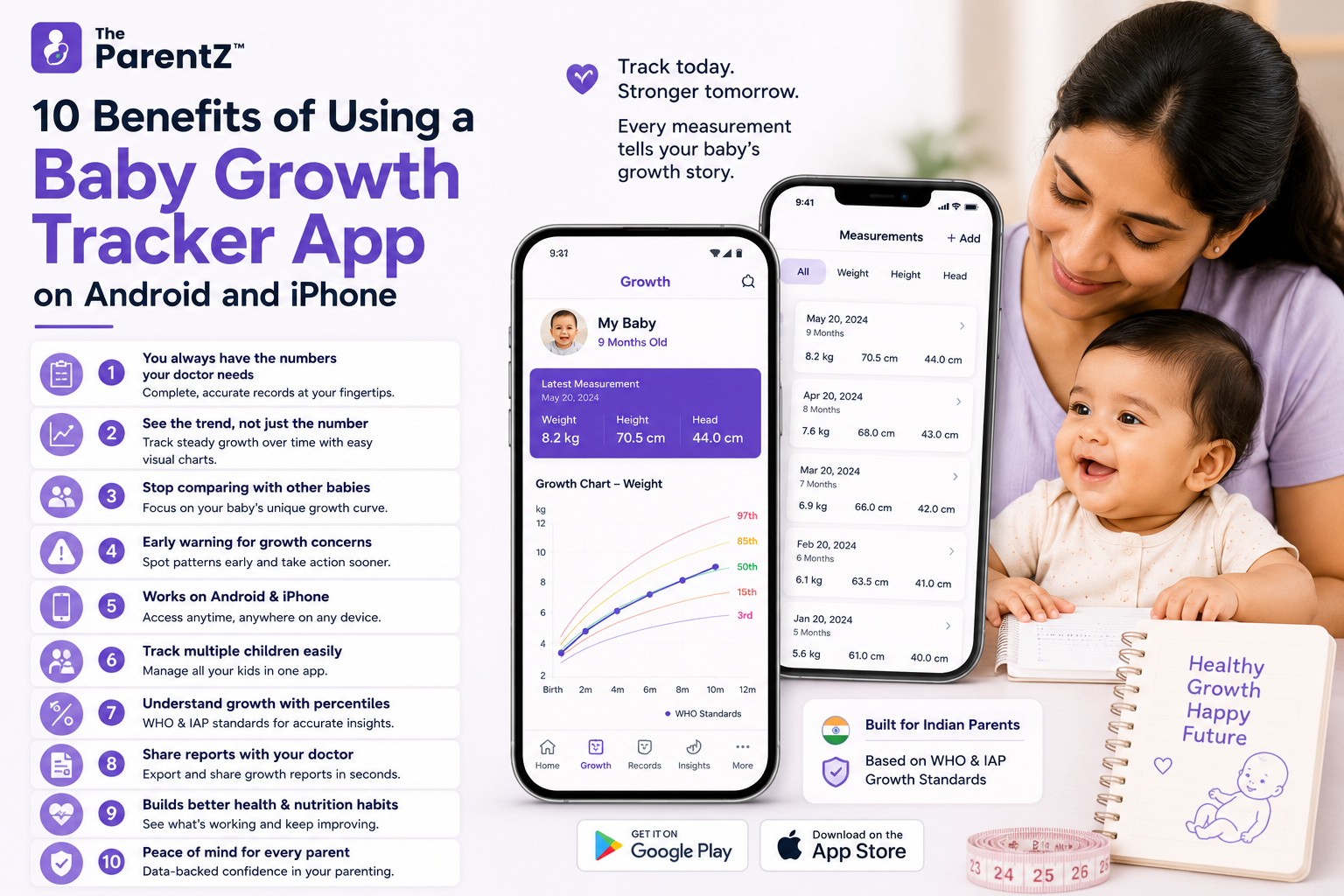
Record your baby’s height, weight, and head size
Compare growth with standard charts (like WHO growth charts)
Track progress over time
It’s a simple way to see how your baby is growing without guessing or overthinking every small change.
The Real Problem: Parents Track Numbers, But Not Patterns
Here’s where things go wrong.
Parents often:
Check weight once and panic
Compare babies with others
Forget past measurements
Overthink small changes
In India, there’s an extra layer:
Advice from elders
Google searches
Doctor visits
Too much information, not enough clarity.
My honest opinion?
Growth tracking is helpful—but misunderstanding it creates unnecessary stress.
Where The Parentz Growth Tracker Helps
Instead of writing numbers in random notebooks or relying on memory, a proper system makes life easier.
The Baby Growth Tracker App for parents by The Parentz keeps everything in one place.
What works well:
Simple data entry
Clear growth charts
WHO-based tracking
What doesn’t:
It won’t help if you log data randomly or inconsistently
Consistency matters more than features.
How a Baby Growth Tracker App Actually Works
Let’s break it down in a practical way.
What does a growth tracker actually track?
Most apps track three key things:
1. Weight
Helps monitor nutrition and overall growth
2. Height (Length)
Shows physical development
3. Head circumference
Important for brain development tracking
These three together give a complete growth picture.
What are growth percentiles (and why do they confuse parents)?
Percentiles sound complicated—but they’re not.
Example:
If your baby is in the 40th percentile:
40% of babies weigh less
60% weigh more
It does NOT mean your baby is “below average” in a bad way.
Does a baby growth tracker app really help?
Short answer: Yes—but only if used correctly.
It helps you:
See trends
Avoid guesswork
Stay consistent
But it doesn’t:
Replace doctors
Give instant answers
What Usually Works (And What Doesn’t)
Let’s talk real experience.
What works:
Tracking weekly
Looking at trends
Staying consistent
What doesn’t:
Checking daily weight
Compared to other babies
Panicking over small dips
My personal take:
Parents who focus on trends stay calmer than those who focus on single numbers.
Key Benefits of Using a Baby Growth Tracker App
1. Do you actually remember growth trends?
No.
You remember moments, not patterns.
A tracker shows:
Steady growth
Sudden changes
That’s what matters.
2. Can it help detect issues early?
Yes.
If something is off:
Slow weight gain
Growth stagnation
You’ll notice earlier than usual.
3. Does it reduce unnecessary stress?
Yes, and this is important.
Without tracking:
Every small change feels like a problem
With tracking:
You see the bigger picture
4. Can it improve doctor visits?
Definitely.
Instead of guessing, you show:
Accurate data
Growth charts
Doctors can guide you better.
5. Does it help you stay consistent?
Consistency is hard.
A tracker makes it easier by:
Reminding you
Organizing data
6. Can both parents stay involved?
Yes.
Both parents can:
Check updates
Track progress
No confusion.
Comparison Table: With vs Without a Growth Tracker

It’s a simple shift—but it helps.
Real-Life Example (Easy to Understand)
Think of growth tracking like tracking your fitness.
If you weigh yourself once:
It means nothing
If you track regularly:
You see progress
The same logic applies to babies.
Step-by-Step: How to Use a Baby Growth Tracker App
Keep it simple.
Step 1: Enter your baby’s details
Basic info like age and birth weight
Step 2: Add measurements
Weekly or bi-weekly
Step 3: Review charts
Look for patterns, not single data points
Step 4: Stay consistent
This is the most important part
Step 5: Consult a doctor if needed
Use data as support—not final judgment
Common Mistakes Parents Make
Let’s clear these up.
1. Overtracking
Daily measurements create stress
2. Comparing babies
Every baby grows differently
3. Misunderstanding percentiles
Low percentile ≠ problem
4. Stopping early
Tracking works over time
Practical Tips for Parents in India
Follow the WHO growth charts
Don’t compare with neighbors’ kids
Focus on nutrition and routine
Track consistently but not obsessively
Trust your pediatrician
FAQs
Is a baby growth tracker app necessary?
Not necessary—but very helpful.
How often should I track growth?
Once every 1–2 weeks is enough.
What is a normal growth percentile?
Anywhere between the 5th and 95th percentile can be normal.
Can it replace doctor visits?
No. It supports medical advice—it doesn’t replace it.
Key Takeaways
Growth tracking helps you see patterns, not just numbers
Consistency matters more than frequency
Percentiles are guides, not judgments
Apps reduce confusion—but don’t replace doctors
Awareness leads to better parenting decisions
Final Thoughts: My Honest Opinion
Here’s what I’ve learned:
Parents don’t need more numbers—they need a better understanding.
That’s what a growth tracker gives you.
The Baby Growth Tracker App for parents from The Parentz isn’t complicated. It’s just a simple tool that helps you stay aware and consistent.
And honestly, when you’re already dealing with sleepless nights and constant worry, even small clarity makes a big difference.







Write a comment ...