
Why Tracking Growth Feels Helpful… But Can Also Confuse You
Every parent wants to know one thing: Is my baby growing well? And honestly, that question never really goes away. According to the World Health Organization (WHO), monitoring a child’s growth is one of the most effective ways to assess overall health and nutrition.
That’s why many families now rely on a Baby growth tracker App for parents to keep things organized. But here’s the catch—using the app wrong can actually create more stress instead of clarity. I’ve seen it happen a lot. The tool is helpful, but only if you avoid a few common mistakes.
What Is a Baby Growth Tracker (And Why Parents Use It)?
Let’s keep it simple.
A baby growth tracker helps you record:
Height
Weight
Head circumference
Growth percentiles
It then compares your baby’s data with standard growth charts (like WHO charts).
It’s not just about numbers—it’s about tracking trends over time to understand if your baby is growing steadily.
The Real Problem: Where Parents Go Wrong
Here’s what I’ve noticed over the years.
Parents don’t struggle with using the app.
They struggle with understanding what the data means.
And that leads to:
Unnecessary panic
Overthinking
Compared to other babies
My honest take?
Growth tracking is useful—but it’s very easy to misinterpret if you don’t stay practical.
How Growth Tracker Helps (If Used Right)
Before we jump into mistakes, let’s talk solutions.
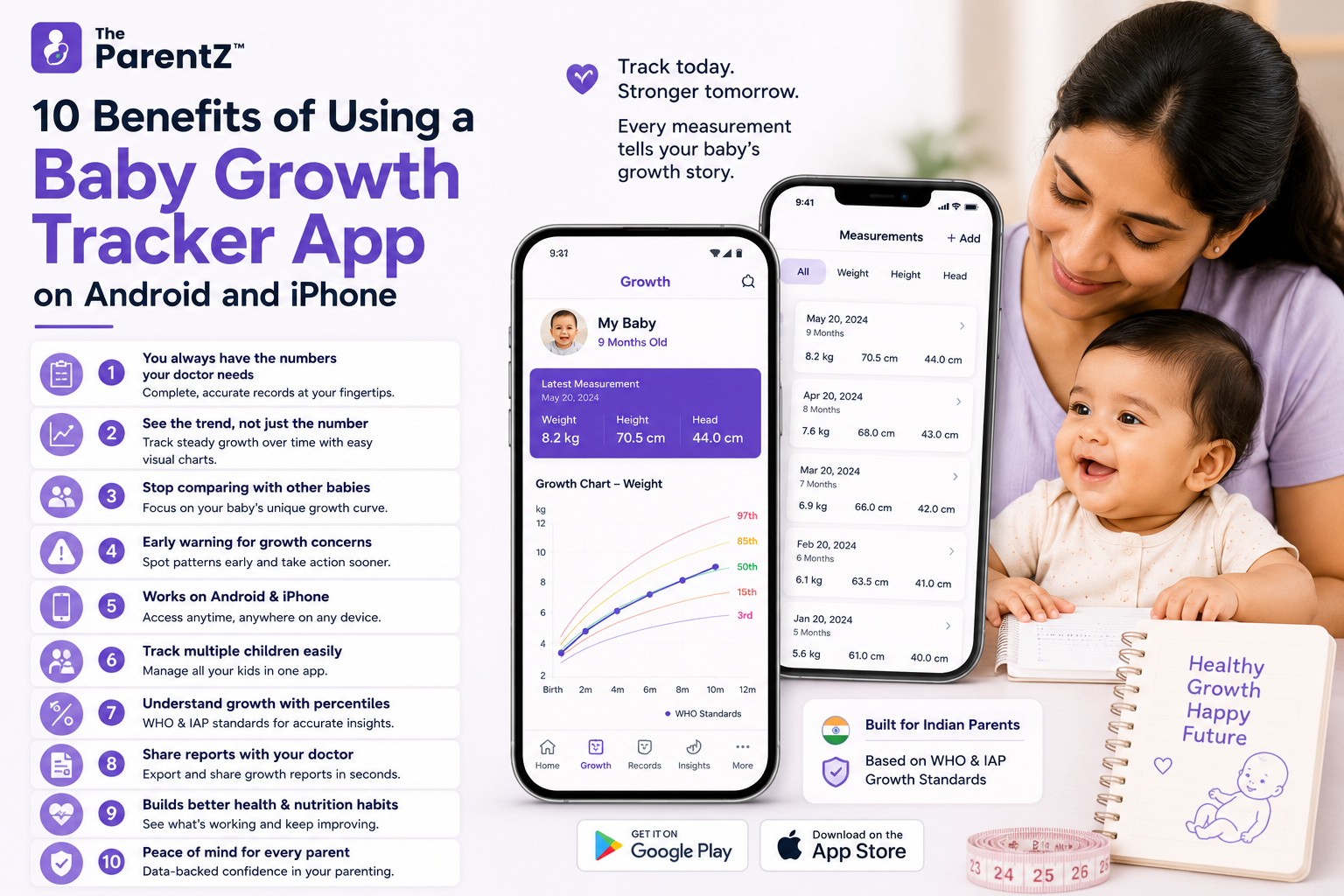
The Baby Growth Tracker App for parents is built to simplify tracking without overwhelming you.
What works well:
Easy-to-read charts
WHO growth standards
Simple data logging
But again, no app can replace common sense.
10 Common Mistakes Parents Make While Using a Baby Growth Tracker
Let’s break this down clearly.
1. Are you focusing too much on single measurements?
This is the biggest mistake.
Parents see one low weight entry and panic.
But growth doesn’t work like that.
What actually matters:
Trends over time
Consistent growth, not perfect numbers
Think of it like school marks. One low test doesn’t mean failure.
2. Do you compare your baby with others?
Very common in India—especially in family discussions.
“Sharma ji ka baby is heavier.”
But here’s the truth:
Babies grow at different rates.
Comparison creates stress, not clarity.
3. Are you misunderstanding growth percentiles?
Percentiles confuse a lot of parents.
Example:
If your baby is in the 30th percentile:
It does NOT mean something is wrong
It just means 30% of babies weigh less, 70% weigh more
Being in the 10th or 90th percentile can both be normal.
4. Are you expecting steady, linear growth?
Growth is not a straight line.
Some weeks:
Rapid growth
Other weeks:
Almost no change
This is normal.
Growth happens in spurts, not smooth lines.
5. Do you panic over small drops?
A small dip in weight or percentile happens.
Reasons can include:
Illness
Teething
Temporary appetite changes
One dip is not a problem. Repeated drops might be.
6. Are you logging incorrect data?
This one is underrated.
Common errors:
Wrong weight entry
Mixing kg and lbs
Guessing instead of measuring
Bad data = wrong conclusions.
Always double-check.
7. Are you overtracking every small detail?
Some parents log too much.
Daily entries for everything.
That’s exhausting.
What actually works:
Weekly or bi-weekly tracking
Overtracking leads to burnout.
8. Do you ignore your baby’s overall health?
Growth charts are just one piece.
Also look at:
Activity levels
Feeding habits
Mood
A happy, active baby matters more than perfect numbers.
9. Are you relying only on the app (and ignoring doctors)?
Apps are tools—not experts.
If something feels off:
Talk to your pediatrician
Data helps, but medical advice matters more.
10. Do you stop tracking too early?
This happens a lot.
Parents start strong, then quit.
But growth tracking becomes more useful over time.
Patterns take weeks—not days.
Comparison Table: Smart Tracking vs Common Mistakes

Small mindset changes make a big difference.
Real-Life Example
Think of growth tracking like tracking your savings.
If you check your bank account every hour:
You’ll feel stressed
If you check monthly:
You see real progress
Same with baby growth.
Daily changes don’t matter much. Trends do.
Step-by-Step: How to Use a Growth Tracker the Right Way
Keep this simple.
Step 1: Measure correctly
Use proper tools or visit a doctor.
Step 2: Log data honestly
No guessing.
Step 3: Track weekly or bi-weekly
Avoid daily stress.
Step 4: Look for trends
Is growth steady over time?
Step 5: Consult a doctor if needed
Don’t self-diagnose.
Practical Tips for Indian Parents
Don’t compare with relatives’ babies
Use WHO charts, not random internet charts
Trust your pediatrician over WhatsApp advice
Focus on nutrition and routine, not just numbers
Stay consistent but not obsessive
FAQs
Is a baby growth tracker app necessary?
Not necessary—but very helpful if used correctly.
What is a healthy growth percentile?
Anywhere between the 5th and 95th percentile can be normal.
How often should I track growth?
Once every 1–2 weeks is enough.
When should I worry?
If you see:
Continuous decline
No growth over time
Then consult a doctor.
Final Thoughts:
Here’s what I’ve learned:
Growth tracking is helpful—but overthinking it does more harm than good.
The goal isn’t perfect numbers.
The goal is steady, healthy development.
The Baby Growth Tracker App for parents from The Parentz is a great tool—but like any tool, it works best when used with common sense.
Track smart. Not obsessively.
Key Takeaways
Focus on trends, not single numbers
Avoid comparing babies
Percentiles are not rankings
Consistency matters more than frequency
Use apps as guides, not final answers







Write a comment ...